2022.11.14
Lee Seung-won
“3D Aquaculture? Standardizing with IT to Protect Income and Climate”
Interview with Kim Min-soo, CEO of the Korea Fisheries Research & Development Institute
Editor's Note
Every Monday, we will be focusing on interviews with representatives of domestic climate tech startups at the forefront of solving the climate crisis.
Meet the cold-hearted enthusiasts who are 'cooling down the planet' with Seungwon Lee, an advisor in charge of climate startups at impact accelerator Sopung Ventures.
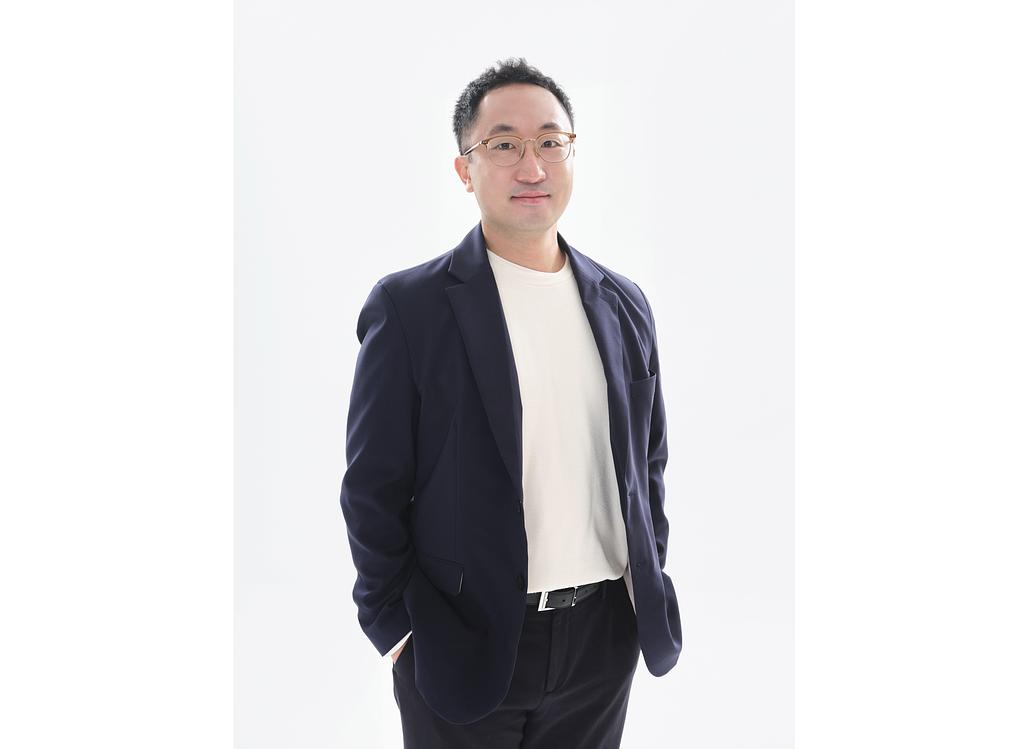
Kim Min-su, President of the Korea Fisheries Research & Development Institute. Source: Korea Fisheries Research & Development Institute
“If there are 1,000 fish farms in Korea, that means there are 1,000 different types of know-how. They rely on their own know-how that has been around for 20 or 30 years. This means that there is no standardization, and so they are bound to lag behind in terms of technology adoption, price competitiveness, and efficient operation.”
“Producers can reduce distribution costs and make profits commensurate with their efforts. Consumers can eat fresh seafood at a low price, while also reducing environmental pollution. On the other hand, they can also increase the seriously low food self-sufficiency rate. That’s exactly what we do.”
“I’m a fish doctor. I always explain to my juniors why this job is fun and what kind of growth potential there is.”
The person I met this time is a 'fish doctor' (aquatic disease management specialist). Kim Min-soo, CEO of 'Korea Fisheries Research and Development Institute'. He literally takes care of, raises, and treats fish. In 2019, fish experts, big data, and information technology (IT) experts gathered to establish the Korea Fisheries Research and Development Institute (hereinafter referred to as the Institute).
This company is a startup that provides solutions such as 'water quality management - disease prevention - growth-specific feed provision' to fish farmers based on big data and Internet of Things (IoT) technology. In the domestic fisheries industry, only 2.5% of people have adopted the smart aquaculture system (Smart Aquafarm), so it is still in its infancy. This is also the reason CEO Kim judged that a 'wide market' is open.
(CEO Kim Min-soo emphasized that the place he is representing is not a 'research institute' but a startup. He said that the reason he named it that way was to eliminate emotional distance from the fishermen who would become his customers. To dispel the misunderstanding that 'they are a business that steals my technology'. So far so good. However, he said that investors are a bit confused. So he also said that he was worried about what to name the company.)
When it comes to fisheries and aquaculture, the thoughts and feelings that come to mind are mostly “difficult” and “hard.” For Koreans, who consume the largest amount of fishery products in the world (as of 2018, OECD Fisheries Report 2020), the words “fish,” “livestock,” and “fishery products” are highly favorable, but the feelings conveyed by words such as “fishery” and “aquaculture” are not necessarily the same. In reality, this field is still a labor-intensive industry with high entry barriers and relies on experience and know-how. It is also true that it is facing an even more difficult environment due to large and small issues such as heavy metals, climate change, microplastics, and radioactivity. The Korea Fisheries Research and Development Institute has taken note of this.
(The reason why the aquaculture industry is important is because it accounts for about 60% of domestic fishery production. In November 2019, the government announced the 'Smart Aquaculture Goal (2030)'. It stated the goals as achieving about 100 trillion won in fishery industry sales, achieving an average annual income of 80 million won, making more than 50% of aquaculture farms smart, and creating 40,000 jobs in the fishery industry.)
I had an online conversation with CEO Kim Min-soo on the 9th.
— While preparing for the interview, I briefly looked into your major and it was ‘Aquatic Life Science.’ But not everyone majors in this field. How did you end up doing this job?
“I had a vague idea of wanting to start a business since I was young, and I met a businessman who was importing shrimp from Southeast Asia. Every time I met him, I knew that his business was thriving. One day, I saw that his car had changed… (Laughs) But, every time I met him, he would try to convince me that he could grow the aquaculture industry ‘globally.’ After that, I became a doctor who managed and prescribed fish diseases in college, and as I delved into this field, I ended up here.”
(In another interview, CEO Kim also said, “I became interested in the global aquaculture platform after learning that 30 trillion won of the 48 trillion won global shrimp market is in the Asian market.”)
— Isn’t aquaculture a bit difficult? The barriers to entry are high… .
“Except for Dongwon Industries, I didn’t see any notable companies. I’m from Busan, and no matter how much I looked around, most of them were small businesses. So I started to think about how to grow the aquaculture industry. While dreaming of starting a business, I even applied to the Navy. I should say that I strengthened my resolve while on a ship for two years and two months.”
— You even applied for the Navy, so you must have been quite determined. How is it now that you’ve actually started the business? There must have been a lot of unexpected difficulties.
“There are a few things. First, people’s perception. I’ve encountered many perceptions that it’s a 3D industry and a declining primary industry. Second, because the fishing industry itself is closed, it’s difficult to learn technology or know-how. This means that the barrier to entry is high, especially for beginners or young people who are just starting out. Another problem is the aging population. Since production is based on the experience of older people, I realized that it’s difficult to introduce new technologies. There’s also the regulatory issue. Unlike other countries, Korea has blocked large companies from entering the aquaculture industry in principle, which has made technological development difficult. Some varieties have been allowed to enter large companies since a few years ago, though.”
(The government has long prohibited large corporations from entering the market in order to protect small-scale fish farmers. However, the problem of backwardness and aging in the fishing industry has arisen, and after debate and discussion, large corporations have been allowed to participate only in certain species that require large-scale investment, such as tuna and salmon farming (the 'Enforcement Decree of the Aquaculture Industry Development Act' was enacted in August 2020).)
Source: Korea Fisheries Research & Development Institute
— It is a difficult situation both in perception and reality. How did you feel about it on site?
“If there are 1,000 fish farms in the country, there are 1,000 different types of know-how. They rely on their own know-how that has been around for 20 or 30 years. This means that there is no standardization, and as a result, they are bound to lag behind in terms of technology adoption, price competitiveness, and efficient operation.”
— It’s surprising that there is as much know-how as there are farms. That’s where your worries began.
“Yes. In the end, standardization is the key. There are three keywords: standardization of fish farms, standardization of operating software, and standardization of data. First, if you go to a fish farm, everything from the size of the tank to the structure and size of the pipes is different. If you import expensive products and materials from overseas (95% of the equipment, such as sensors and filters, is dependent on imports) and build a fish farm, you should be able to raise a variety of fish species and generate profits, but that’s not the case in reality. The typical and traditional way is to specialize in raising only one species of fish.”
— If it’s shrimp, it’s shrimp, if it’s trout, it’s trout. You only raise one? When you go to the field, there are peppers and potatoes, too.
“Most aquaculture businesses are still like that. After building a farm, they focus on raising only one species of fish, which leads to a structure where costs only increase. Our solution is a ‘standardized farm’, which means that if you just build the hardware, you can manage water quality, provide feed for each growth stage, and manage diseases. Anyone can do it, anywhere.”
— Fish species conversion, for example, going from raising shrimp to raising salmon, or from raising salmon to raising trout?
“Yes. You can change the fish species by simply changing the data. Of course, in the case of shrimp you mentioned, 80% and salmon, 100% depend on imports.”
(Currently, all salmon consumed in Korea is dependent on imports. Recently, some large corporations have announced business plans for domestic salmon farming. The global salmon market is estimated to be worth 60 trillion won annually, and about 90% of this is produced through farming.)
— What fundamentally changes when we standardize the farm and operating software?
“Once it’s standardized, the barrier to entry is lowered. People only think that ‘fish farming is difficult and hard,’ but with this solution, even beginners without long-term know-how, and even people with disabilities, can operate it. I think this is important. Also, I think it can solve the problem of producers not receiving proper compensation or reward, as I felt when I was growing up in Busan.”
— It is important that ‘anyone’ can try aquaculture, but it also seems important that ‘anywhere’ can do it.
“Climate change is being talked about a lot these days. Some island nations are actually submerged, and climate change is making it even more difficult to predict the fishing environment. Most of our fish farms are located near the ocean. There are many problems here. First, they are exposed to nature and are helpless against heat waves, droughts, and storms. Second, if one fish farm is polluted, the fish farms next to it are also affected. A vicious cycle occurs where ocean pollution worsens.”
— So you need a predictable and controllable solution?
“Instead of exposing the fish farms near the sea like they are now, we need to be able to bring them up to land. The Fukushima nuclear power plant accident in Japan caused a radioactive leak, and not long ago, they said they would just dump the contaminated water into the sea. Who would eat it if they were worried? We need technology that allows us to do aquaculture on land, inland, without being exposed to the sea. That’s what we do.”
— Maybe that’s why you opened a fish farm in Chuncheon, Gangwon-do. When I think of Gangwon-do and Chuncheon, the first things that come to mind are Korean beef, ranches, and dakgalbi, so a fish farm there…?
“We are currently testing aquaculture farms in inland areas, not near the ocean. We started with a small area (about 30 pyeong of tanks) and are currently raising ocean shrimp. We have seen a tenfold increase in productivity so far. Increasing production is important, but what I have actually felt while doing this is something else. ‘Producers can reduce distribution costs and make profits commensurate with their efforts.’ Consumers can eat fresh seafood at a low price, and at the same time, environmental pollution is reduced. On the other hand, we can also increase the seriously low food self-sufficiency rate.”
(According to Dr. Nam Jae-jak, author of 'Food Crisis in Korea', Korea's grain self-sufficiency rate is very low at 20% and food self-sufficiency rate is very low at 46%. We spend 40 trillion won every year to import agricultural products. We are now experiencing firsthand how external variables and factors, such as Russia's invasion of Ukraine, affect our daily lives. Meanwhile, according to the Ministry of Oceans and Fisheries, Korea's fishery self-sufficiency rate is also decreasing from 82.4% in 2001 to 68.4% in 2019 due to increased consumption. The fishery self-sufficiency rate is a concept that includes not only food for the table but also livestock and fish feed.)
— There is a lot of talk about ESG (environment, society, governance) these days. We can’t leave out the environment, in particular. Could you explain a little more about why this business is necessary in relation to the environment and distribution sectors?
“Koreans eat the most seafood in the world, but most of it is imported. Carbon emissions are generated during transportation, and in the case of airplanes, transporting 1 ton of seafood (ingredients) 1 km emits about 1.5 kg of carbon. For example, we import about 62,000 tons of salmon a year (as of 2021), which emits a significant amount of carbon before we meet them on our tables. If we do not import these seafood products, but instead establish various aquaculture farms near cities with a population of over 300,000 people or inland areas and produce them directly, we can reduce all these costs and pollution at the same time.”
(Koreans eat a lot of fish. According to the OECD 2020 report, Korea ranked first in the world in 2018 with an annual per capita seafood consumption of 68 kg. This is a significant amount compared to the world average per capita consumption of 20.5 kg.
Meanwhile, domestic companies must directly reduce carbon emissions or purchase emission rights to achieve the 2050 carbon neutrality target. This ultimately costs money. When companies incur costs, they naturally reflect them in their products or services.)
— I think there are quite a few people around you who are interested in this field. What do you usually talk about?
“When we talk about aquaculture, we tend to focus only on how much we produce, but in fact, there are endless businesses related to aquaculture. For example, there are many businesses related to feed, treatment, system engineering, smart devices, data, and certification. If the model we are creating becomes popular, we can easily handle everything from production to distribution and sales on our own. It will be easier to understand if you think of it as solving hardware and software at the same time. I think that as the industry expands, related businesses will increase and become more abundant.”
(The actual fisheries industry has a very high growth potential in the future. According to the analysis of the 'Agricultural Outlook 2019-2029' published by the OECD-FAO by the Korea Maritime Institute, the world's average fishery consumption per person in 2028 is expected to increase by 4.2% from 20.4kg in 2017 to 21.3kg. Korea's fishery consumption is more than three times the average of other countries, so it is highly likely that it will consume more fishery products in the future. As consumption increases, prices also rise. The price of fishery products is expected to increase by 23% from $2.9 (about 3,800 won) per kg in 2017 to $3.6 (about 4,700 won) in 2028. Meanwhile, grains are expected to increase by 1.6% and meat by 1.2% by 2028.)
— What are your plans for the future?
“We plan to create an actual model based on the results and data obtained so far. The aquaculture farms currently being operated in Chuncheon and other places are small in scale, making it difficult to provide a sense of reality. We plan to establish a 1,000-pyeong aquaculture farm in the future and show real results to customers who engage in aquaculture. (The research institute announced that it is currently pursuing investment attraction (pre-A).)
Recently, due to various reasons such as environmental pollution, health, and diet, the number of people interested in a diet that does not include meat is increasing. According to Lee Eui-cheol, an occupational medicine specialist and author of 'Climate Gourmet', terrestrial organisms release the carbon they absorbed while alive back into the air during the decomposition process after death, while marine organisms store the carbon stored in their bodies on the seabed for thousands of years even after death ('Meat, fish, milk... If we were to eat as much as we do now, we would need 2.3 Earths.' Hankyoreh, August 20, 2022). Expectations are high for Representative Kim's challenge to once again expand people's choices for the environment and climate.
Written by Seungwon Lee, Advisor at Picnic Ventures
Edited by Yoon Shin-young, alookso editor
View the Full Article Text


2022.11.14
Lee Seung-won
“3D Aquaculture? Standardizing with IT to Protect Income and Climate”
Interview with Kim Min-soo, CEO of the Korea Fisheries Research & Development Institute
Editor's Note
Every Monday, we will be focusing on interviews with representatives of domestic climate tech startups at the forefront of solving the climate crisis.
Meet the cold-hearted enthusiasts who are 'cooling down the planet' with Seungwon Lee, an advisor in charge of climate startups at impact accelerator Sopung Ventures.
Kim Min-su, President of the Korea Fisheries Research & Development Institute. Source: Korea Fisheries Research & Development Institute
“If there are 1,000 fish farms in Korea, that means there are 1,000 different types of know-how. They rely on their own know-how that has been around for 20 or 30 years. This means that there is no standardization, and so they are bound to lag behind in terms of technology adoption, price competitiveness, and efficient operation.”
“Producers can reduce distribution costs and make profits commensurate with their efforts. Consumers can eat fresh seafood at a low price, while also reducing environmental pollution. On the other hand, they can also increase the seriously low food self-sufficiency rate. That’s exactly what we do.”
“I’m a fish doctor. I always explain to my juniors why this job is fun and what kind of growth potential there is.”
The person I met this time is a 'fish doctor' (aquatic disease management specialist). Kim Min-soo, CEO of 'Korea Fisheries Research and Development Institute'. He literally takes care of, raises, and treats fish. In 2019, fish experts, big data, and information technology (IT) experts gathered to establish the Korea Fisheries Research and Development Institute (hereinafter referred to as the Institute).
This company is a startup that provides solutions such as 'water quality management - disease prevention - growth-specific feed provision' to fish farmers based on big data and Internet of Things (IoT) technology. In the domestic fisheries industry, only 2.5% of people have adopted the smart aquaculture system (Smart Aquafarm), so it is still in its infancy. This is also the reason CEO Kim judged that a 'wide market' is open.
(CEO Kim Min-soo emphasized that the place he is representing is not a 'research institute' but a startup. He said that the reason he named it that way was to eliminate emotional distance from the fishermen who would become his customers. To dispel the misunderstanding that 'they are a business that steals my technology'. So far so good. However, he said that investors are a bit confused. So he also said that he was worried about what to name the company.)
When it comes to fisheries and aquaculture, the thoughts and feelings that come to mind are mostly “difficult” and “hard.” For Koreans, who consume the largest amount of fishery products in the world (as of 2018, OECD Fisheries Report 2020), the words “fish,” “livestock,” and “fishery products” are highly favorable, but the feelings conveyed by words such as “fishery” and “aquaculture” are not necessarily the same. In reality, this field is still a labor-intensive industry with high entry barriers and relies on experience and know-how. It is also true that it is facing an even more difficult environment due to large and small issues such as heavy metals, climate change, microplastics, and radioactivity. The Korea Fisheries Research and Development Institute has taken note of this.
(The reason why the aquaculture industry is important is because it accounts for about 60% of domestic fishery production. In November 2019, the government announced the 'Smart Aquaculture Goal (2030)'. It stated the goals as achieving about 100 trillion won in fishery industry sales, achieving an average annual income of 80 million won, making more than 50% of aquaculture farms smart, and creating 40,000 jobs in the fishery industry.)
I had an online conversation with CEO Kim Min-soo on the 9th.
— While preparing for the interview, I briefly looked into your major and it was ‘Aquatic Life Science.’ But not everyone majors in this field. How did you end up doing this job?
“I had a vague idea of wanting to start a business since I was young, and I met a businessman who was importing shrimp from Southeast Asia. Every time I met him, I knew that his business was thriving. One day, I saw that his car had changed… (Laughs) But, every time I met him, he would try to convince me that he could grow the aquaculture industry ‘globally.’ After that, I became a doctor who managed and prescribed fish diseases in college, and as I delved into this field, I ended up here.”
(In another interview, CEO Kim also said, “I became interested in the global aquaculture platform after learning that 30 trillion won of the 48 trillion won global shrimp market is in the Asian market.”)
— Isn’t aquaculture a bit difficult? The barriers to entry are high… .
“Except for Dongwon Industries, I didn’t see any notable companies. I’m from Busan, and no matter how much I looked around, most of them were small businesses. So I started to think about how to grow the aquaculture industry. While dreaming of starting a business, I even applied to the Navy. I should say that I strengthened my resolve while on a ship for two years and two months.”
— You even applied for the Navy, so you must have been quite determined. How is it now that you’ve actually started the business? There must have been a lot of unexpected difficulties.
“There are a few things. First, people’s perception. I’ve encountered many perceptions that it’s a 3D industry and a declining primary industry. Second, because the fishing industry itself is closed, it’s difficult to learn technology or know-how. This means that the barrier to entry is high, especially for beginners or young people who are just starting out. Another problem is the aging population. Since production is based on the experience of older people, I realized that it’s difficult to introduce new technologies. There’s also the regulatory issue. Unlike other countries, Korea has blocked large companies from entering the aquaculture industry in principle, which has made technological development difficult. Some varieties have been allowed to enter large companies since a few years ago, though.”
(The government has long prohibited large corporations from entering the market in order to protect small-scale fish farmers. However, the problem of backwardness and aging in the fishing industry has arisen, and after debate and discussion, large corporations have been allowed to participate only in certain species that require large-scale investment, such as tuna and salmon farming (the 'Enforcement Decree of the Aquaculture Industry Development Act' was enacted in August 2020).)
Source: Korea Fisheries Research & Development Institute
— It is a difficult situation both in perception and reality. How did you feel about it on site?
“If there are 1,000 fish farms in the country, there are 1,000 different types of know-how. They rely on their own know-how that has been around for 20 or 30 years. This means that there is no standardization, and as a result, they are bound to lag behind in terms of technology adoption, price competitiveness, and efficient operation.”
— It’s surprising that there is as much know-how as there are farms. That’s where your worries began.
“Yes. In the end, standardization is the key. There are three keywords: standardization of fish farms, standardization of operating software, and standardization of data. First, if you go to a fish farm, everything from the size of the tank to the structure and size of the pipes is different. If you import expensive products and materials from overseas (95% of the equipment, such as sensors and filters, is dependent on imports) and build a fish farm, you should be able to raise a variety of fish species and generate profits, but that’s not the case in reality. The typical and traditional way is to specialize in raising only one species of fish.”
— If it’s shrimp, it’s shrimp, if it’s trout, it’s trout. You only raise one? When you go to the field, there are peppers and potatoes, too.
“Most aquaculture businesses are still like that. After building a farm, they focus on raising only one species of fish, which leads to a structure where costs only increase. Our solution is a ‘standardized farm’, which means that if you just build the hardware, you can manage water quality, provide feed for each growth stage, and manage diseases. Anyone can do it, anywhere.”
— Fish species conversion, for example, going from raising shrimp to raising salmon, or from raising salmon to raising trout?
“Yes. You can change the fish species by simply changing the data. Of course, in the case of shrimp you mentioned, 80% and salmon, 100% depend on imports.”
(Currently, all salmon consumed in Korea is dependent on imports. Recently, some large corporations have announced business plans for domestic salmon farming. The global salmon market is estimated to be worth 60 trillion won annually, and about 90% of this is produced through farming.)
— What fundamentally changes when we standardize the farm and operating software?
“Once it’s standardized, the barrier to entry is lowered. People only think that ‘fish farming is difficult and hard,’ but with this solution, even beginners without long-term know-how, and even people with disabilities, can operate it. I think this is important. Also, I think it can solve the problem of producers not receiving proper compensation or reward, as I felt when I was growing up in Busan.”
— It is important that ‘anyone’ can try aquaculture, but it also seems important that ‘anywhere’ can do it.
“Climate change is being talked about a lot these days. Some island nations are actually submerged, and climate change is making it even more difficult to predict the fishing environment. Most of our fish farms are located near the ocean. There are many problems here. First, they are exposed to nature and are helpless against heat waves, droughts, and storms. Second, if one fish farm is polluted, the fish farms next to it are also affected. A vicious cycle occurs where ocean pollution worsens.”
— So you need a predictable and controllable solution?
“Instead of exposing the fish farms near the sea like they are now, we need to be able to bring them up to land. The Fukushima nuclear power plant accident in Japan caused a radioactive leak, and not long ago, they said they would just dump the contaminated water into the sea. Who would eat it if they were worried? We need technology that allows us to do aquaculture on land, inland, without being exposed to the sea. That’s what we do.”
— Maybe that’s why you opened a fish farm in Chuncheon, Gangwon-do. When I think of Gangwon-do and Chuncheon, the first things that come to mind are Korean beef, ranches, and dakgalbi, so a fish farm there…?
“We are currently testing aquaculture farms in inland areas, not near the ocean. We started with a small area (about 30 pyeong of tanks) and are currently raising ocean shrimp. We have seen a tenfold increase in productivity so far. Increasing production is important, but what I have actually felt while doing this is something else. ‘Producers can reduce distribution costs and make profits commensurate with their efforts.’ Consumers can eat fresh seafood at a low price, and at the same time, environmental pollution is reduced. On the other hand, we can also increase the seriously low food self-sufficiency rate.”
(According to Dr. Nam Jae-jak, author of 'Food Crisis in Korea', Korea's grain self-sufficiency rate is very low at 20% and food self-sufficiency rate is very low at 46%. We spend 40 trillion won every year to import agricultural products. We are now experiencing firsthand how external variables and factors, such as Russia's invasion of Ukraine, affect our daily lives. Meanwhile, according to the Ministry of Oceans and Fisheries, Korea's fishery self-sufficiency rate is also decreasing from 82.4% in 2001 to 68.4% in 2019 due to increased consumption. The fishery self-sufficiency rate is a concept that includes not only food for the table but also livestock and fish feed.)
— There is a lot of talk about ESG (environment, society, governance) these days. We can’t leave out the environment, in particular. Could you explain a little more about why this business is necessary in relation to the environment and distribution sectors?
“Koreans eat the most seafood in the world, but most of it is imported. Carbon emissions are generated during transportation, and in the case of airplanes, transporting 1 ton of seafood (ingredients) 1 km emits about 1.5 kg of carbon. For example, we import about 62,000 tons of salmon a year (as of 2021), which emits a significant amount of carbon before we meet them on our tables. If we do not import these seafood products, but instead establish various aquaculture farms near cities with a population of over 300,000 people or inland areas and produce them directly, we can reduce all these costs and pollution at the same time.”
(Koreans eat a lot of fish. According to the OECD 2020 report, Korea ranked first in the world in 2018 with an annual per capita seafood consumption of 68 kg. This is a significant amount compared to the world average per capita consumption of 20.5 kg.
Meanwhile, domestic companies must directly reduce carbon emissions or purchase emission rights to achieve the 2050 carbon neutrality target. This ultimately costs money. When companies incur costs, they naturally reflect them in their products or services.)
— I think there are quite a few people around you who are interested in this field. What do you usually talk about?
“When we talk about aquaculture, we tend to focus only on how much we produce, but in fact, there are endless businesses related to aquaculture. For example, there are many businesses related to feed, treatment, system engineering, smart devices, data, and certification. If the model we are creating becomes popular, we can easily handle everything from production to distribution and sales on our own. It will be easier to understand if you think of it as solving hardware and software at the same time. I think that as the industry expands, related businesses will increase and become more abundant.”
(The actual fisheries industry has a very high growth potential in the future. According to the analysis of the 'Agricultural Outlook 2019-2029' published by the OECD-FAO by the Korea Maritime Institute, the world's average fishery consumption per person in 2028 is expected to increase by 4.2% from 20.4kg in 2017 to 21.3kg. Korea's fishery consumption is more than three times the average of other countries, so it is highly likely that it will consume more fishery products in the future. As consumption increases, prices also rise. The price of fishery products is expected to increase by 23% from $2.9 (about 3,800 won) per kg in 2017 to $3.6 (about 4,700 won) in 2028. Meanwhile, grains are expected to increase by 1.6% and meat by 1.2% by 2028.)
— What are your plans for the future?
“We plan to create an actual model based on the results and data obtained so far. The aquaculture farms currently being operated in Chuncheon and other places are small in scale, making it difficult to provide a sense of reality. We plan to establish a 1,000-pyeong aquaculture farm in the future and show real results to customers who engage in aquaculture. (The research institute announced that it is currently pursuing investment attraction (pre-A).)
Recently, due to various reasons such as environmental pollution, health, and diet, the number of people interested in a diet that does not include meat is increasing. According to Lee Eui-cheol, an occupational medicine specialist and author of 'Climate Gourmet', terrestrial organisms release the carbon they absorbed while alive back into the air during the decomposition process after death, while marine organisms store the carbon stored in their bodies on the seabed for thousands of years even after death ('Meat, fish, milk... If we were to eat as much as we do now, we would need 2.3 Earths.' Hankyoreh, August 20, 2022). Expectations are high for Representative Kim's challenge to once again expand people's choices for the environment and climate.
Written by Seungwon Lee, Advisor at Picnic Ventures
Edited by Yoon Shin-young, alookso editor
View the Full Article Text